

Dealing Desk Broker Functions
Dealing Desk Broker Functions: a practical, no-hype guide for readers from Forextoolstrader Com.
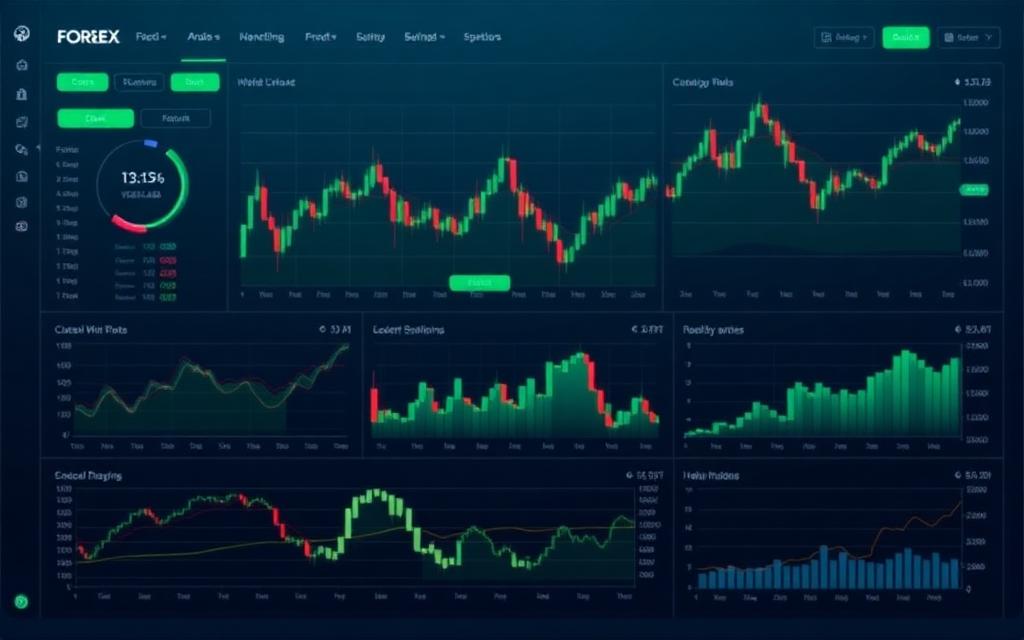
Understanding the Dealing Desk Model: An Introduction
Unlike their no-dealing desk counterparts, these brokers act as a direct counterparty to their clients' trades. This means that when a client places a trade, they are not directly accessing the interbank market. Instead, they are trading directly with the broker. The dealing desk essentially creates its own internal market for its clients, offering bid and ask prices and executing orders against these prices. This operational model grants them considerable control over the trading environment, influencing aspects like pricing, execution speed, and even the availability of liquidity. Understanding this fundamental structure is important for any trader looking to engage with such a broker, as it shapes the entire trading experience from order placement to profit realization.
The Primary Function: Market Making and Internalizing Trades
The fundamental role of a dealing desk in forex trading is to serve as a market maker. By continuously displaying these prices, they provide liquidity to their clients, ensuring that there is always a price available for clients to trade at. A significant part of this market-making function is the internalization of trades. When a client places a buy order, the dealing desk may take the opposite side of that trade, effectively selling to the client from its own inventory or offsetting an existing sell order from another client. Similarly, for a client's sell order, the dealing desk might buy from the client. This internal matching process means that a significant portion of client orders may not reach the broader interbank market. This allows the dealing desk to profit from the spread between the bid and ask prices it quotes, and potentially from the net exposure of its internal book of client trades. They generate liquidity by being ready to take the opposite side of a client's trade at any given moment, thus ensuring that clients can always enter or exit positions.
How Dealing Desks Execute Your Orders
When a client places a trade order with a dealing desk broker, the process is streamlined and primarily managed internally. The order first arrives at the broker's dealing desk. Unlike a no-dealing desk model where orders are passed directly to external liquidity providers, the dealing desk's primary step is to decide how to fulfill the order itself. If there's an opposing order from another client within the broker's system (e.g., one client wants to buy EUR/USD and another wants to sell EUR/USD at a similar price), the dealing desk can internalize and match these orders. This is the most simple scenario for the broker. If there isn't an immediate internal match, the dealing desk effectively takes the other side of the client's trade, using its own liquidity. This hedging is done to mitigate the dealing desk's risk, not to execute the individual client's trade directly. Therefore, the client's trade is always executed against the dealing desk itself. The dealing desk sets the prices, manages the order book, and is responsible for the final execution, often leading to very fast execution speeds for clients.
Setting Prices: Spreads, Re-quotes, and Fixed Spreads
Dealing desk brokers play a direct role in setting the prices their clients see. They generate liquidity and set prices for traders by quoting their own bid and ask prices, which incorporate their desired profit margin through the spread. A common feature of dealing desk brokers is the offering of fixed spreads. This means that, unlike variable spreads which fluctuate with market volatility, the difference between the bid and ask price remains constant, regardless of market conditions. While this provides predictability for traders, understanding the implications is important. Because the dealing desk is taking the opposite side of trades or managing its own exposure, it needs to confirm its pricing protects its interests, especially during volatile periods. A re-quote occurs when a trader attempts to execute an order, but the dealing desk is unable or unwilling to fill it at the requested price. Instead, it offers a new, updated price. This typically happens during fast-moving markets or when the dealing desk's internal liquidity or risk exposure changes rapidly. Re-quotes are directly related to dealing desk operations because the desk controls the price you trade at. If the market moves significantly between the time you click 'buy' or 'sell' and the order reaches the desk, or if the desk's risk parameters are breached, it will present a new price. Slippage can also occur, though it is often less prevalent than re-quotes with fixed-spread dealing desks. Slippage happens when an order is executed at a price different from the requested price, usually worse for the trader. While re-quotes give you the option to accept the new price or cancel, slippage executes the trade automatically at the new price.
Managing Risk: Hedging and Exposure for Dealing Desks
Effective risk management is essential for dealing desk brokers, as they frequently take the opposite side of client trades. When a dealing desk internalizes trades, it accumulates a net position. For instance, if the majority of its clients are buying EUR/USD, the dealing desk itself becomes "short" EUR/USD. This creates market exposure for the broker. To manage this exposure, dealing desks employ hedging strategies. If the net position exceeds a predefined risk threshold, the dealing desk will often aggregate these internal positions and offset them in the broader interbank market with larger liquidity providers. This could involve placing a larger order with a Tier 1 bank or another prime broker to balance their internal book. The goal is to minimize their own capital at risk from adverse market movements while still facilitating client trades. They might use various hedging techniques, from simple one-to-one hedging for major exposures to more complex portfolio hedging strategies. The precise timing and extent of hedging are important decisions for the dealing desk, influenced by factors like current market volatility, the size of their internal book, and their overall risk appetite. This careful management allows the dealing desk to maintain operations and provide consistent liquidity to its clients, even while acting as their direct counterparty.
The Trader's Perspective: Potential Advantages and Disadvantages
One of the main advantages is the predictability of fixed spreads. For strategies that rely on consistent cost per trade, knowing the spread won't widen unpredictably during market news or volatility offers benefits. Beginners might also find the model simpler to understand. However, the disadvantages are often more prominent in discussions. The most significant concern is the potential for a conflict of interest. Since the dealing desk is often the counterparty to a client's trade, the broker could theoretically profit when a client loses. This inherent conflict raises questions about the impartiality of execution and pricing. Re-quotes are another common disadvantage, interrupting the execution process and potentially leading to missed opportunities or sub-optimal entry/exit points, especially for time-sensitive strategies. While the broker provides a new price, the original desired price is often lost. Some traders also report issues with slippage, even on fixed spread accounts, particularly during major news events where the desk may struggle to hedge quickly enough, forcing execution at a less favorable price than initially requested. Protecting client funds is essential; traders must confirm that their chosen broker adheres to strict client fund segregation practices, which legally separates client money from the broker's operational funds. More details on this can be found at https://forextoolstrader.com/article/forex-broker-client-segregation.
Dealing Desk vs. No Dealing Desk: Functional Differences
The distinction between dealing desk and no dealing desk brokers lies at the very core of their operational models and how they interact with their clients' orders. This means they set their own prices (often fixed spreads) and internalize orders, only hedging with external liquidity providers when their own exposure becomes too high. The execution process involves the dealing desk directly filling orders. In contrast, no dealing desk brokers, which encompass Straight Through Processing (STP) and Electronic Communication Network (ECN) models, aim to connect their clients directly to the interbank market or to a pool of liquidity providers. With an STP broker, client orders are automatically routed to one or more external liquidity providers (banks, other brokers) without intervention from a dealing desk. The broker profits from a small markup on the spread or a commission. ECN brokers go a step further, creating a marketplace where participants (including other brokers, banks, and sometimes even individual traders) can post bids and offers. Client orders are matched against the best available prices from this pool, resulting in raw spreads plus a commission. Functional differences include:
- Counterparty: Dealing desk is the counterparty; no dealing desk passes trades to external counterparties. 2. Pricing: Dealing desks typically offer fixed spreads and control pricing; no dealing desks offer variable, often tighter, spreads derived from market feeds. 3. Execution: Dealing desks may involve re-quotes; no dealing desks aim for direct market execution without re-quotes (though slippage can still occur). 4. Conflict of Interest: Higher potential for conflict with dealing desks; minimized with no dealing desks. 5. Transparency: Dealing desks have less pricing transparency; ECNs offer greater market depth transparency.
To learn more about ECN features, refer to https://forextoolstrader.com/article/ecn-forex-broker-features. These operational differences significantly impact a trader's costs, execution quality, and overall trading strategy.
Choosing a Dealing Desk Broker: What to Consider for Your Trading
When evaluating the functions of a dealing desk broker, traders should carefully consider several factors to match their trading style and expectations. A broker licensed by a reputable authority offers a layer of protection and confirms adherence to certain operational standards. Traders should research the broker's licensing requirements as outlined at https://forextoolstrader.com/article/forex-broker-licensing-requirements. Second, execution quality and re-quote frequency are important. While fixed spreads are an advantage, frequent re-quotes can negate this benefit by causing frustration and missed opportunities. Traders should test the broker's execution on a demo account during various market conditions, especially during news events. Third, assess the consistency of fixed spreads. While "fixed" implies no change, some brokers might widen spreads during extreme volatility or news releases, even on dealing desk models, so confirming their policy is essential. Fourth, consider the range of available instruments and the leverage offered, to confirm it matches your trading strategy. Fifth, responsive customer support matters, as issues with execution or platform functionality can arise. Finally, understand the broker's business model in relation to your own trading volume and strategy. If you are a high-frequency trader or employ strategies that demand ultra-tight spreads and no re-quotes, a dealing desk model might not be the most suitable fit. Conversely, if predictability of costs and simple execution appeal to you, a well-regulated dealing desk broker could be viable. Always conduct thorough due diligence, read reviews, and ideally start with a demo account to experience their functions firsthand. Further guidance on choosing a forex broker can be found at https://forextoolstrader.com/article/how-to-choose-a-forex-broker.
- dealing desk
- forex broker
- market making
- trade execution
- broker review
Related coverage
 ReviewReviews
Aptus Invest review: multi-market tools and tiered accounts under the microscope
Aptus Invest advertises a multi-market platform, charting and five account tiers. Here is what looks useful on paper—and what to independently verify first.
 ReviewReviews
AptusTrade review: MT5 access and account options, with checks before funding
AptusTrade presents MT5, browser-based trading and a six-tier account range. We look at the useful features and the important identity checks to make before depositing.
 ReviewReviews
Forex Margin Account Types
This article offers a practical, in-depth guide to various forex margin account types, detailing their specific features and strategic implications for traders using different platforms reviewed by Forextoolstrader.com.