

Forex Broker Leverage Options
Forex Broker Leverage Options: a practical, no-hype guide for readers from Forextoolstrader Com.
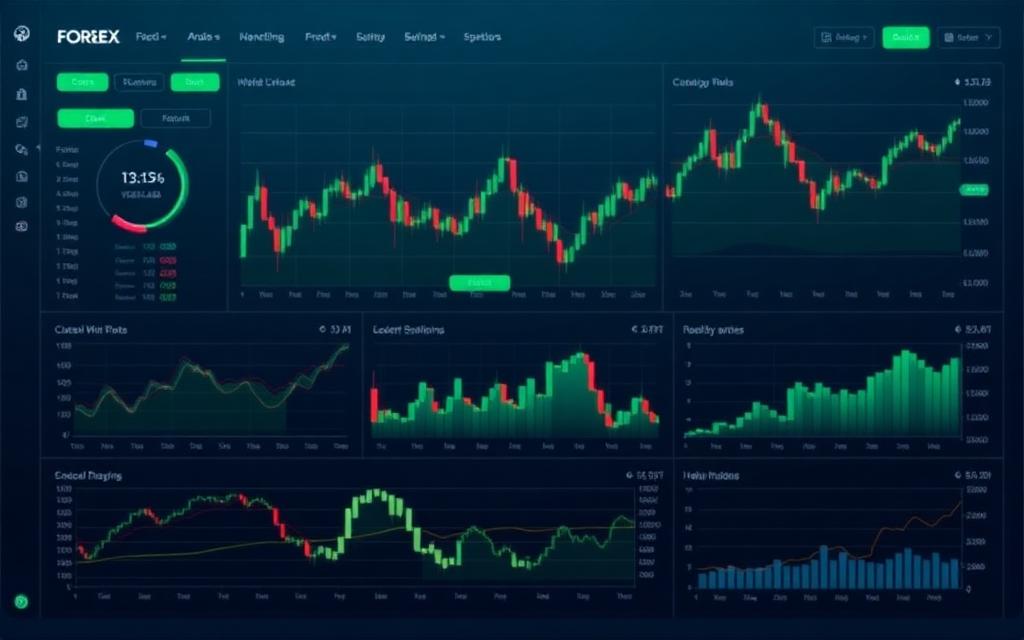
Leverage is a double-edged sword, offering the potential for amplified gains but also exposing traders to significantly higher risks.
Introduction to Forex Broker Leverage Options
Forex trading allows participants to speculate on currency price movements with relatively small amounts of capital, primarily due to the availability of leverage. It enables a trader to control a much larger position in the market than their actual account balance would ordinarily permit. For instance, with 1:100 leverage, a trader can control a $100,000 position with just $1,000 of their own capital.
What is Forex Broker Leverage and How Does It Work?
Forex leverage allows traders to open larger positions than their initial capital would normally permit. When a trader uses leverage, they are essentially borrowing funds from their broker to increase the size of their trade. The portion of the trade that the trader funds themselves is called the margin. For example, if a broker offers 1:500 leverage, it means for every $1 of a trader's capital, the broker lends $499, allowing the trader to control $500 worth of currency. So, to open a standard lot (100,000 units) of EUR/USD, a trader with 1:500 leverage would only need to put up $200 as margin ($100,000 / 500 = $200). The remaining capital is essentially borrowed.
Common Leverage Ratios Offered by Forex Brokers
In highly regulated regions like Europe (under ESMA rules) and North America (CFTC/NFA), retail forex leverage is often capped at 1:30 for major currency pairs, 1:20 for minor pairs and gold, and 1:10 for commodities and indices. This conservative approach aims to protect retail traders from excessive risk. However, in other jurisdictions, such as certain parts of Asia, Africa, or offshore locations, brokers may offer much higher leverage, frequently ranging from 1:100, 1:200, 1:500, or even 1:1000 or higher. These higher ratios mean smaller margin requirements, enabling traders to open larger positions with less capital.
Factors Influencing Available Leverage Options (Regulatory vs. Broker Policy)
Regulatory bodies around the world impose limits on leverage to protect retail investors, with regions like the European Union (via ESMA), the United States (via CFTC/NFA), and Australia (via ASIC) enforcing strict caps, such as 1:30 or 1:50 for major currency pairs. Beyond regulatory mandates, brokers also implement their own policies. Some brokers may offer different leverage levels based on the trader's account type, the specific asset being traded (e.g., lower leverage for exotic pairs or cryptocurrencies), or the trader's classification (e.g., professional traders often qualify for higher leverage than retail clients). These policies often reflect the broker's risk appetite and service model.
Understanding Margin Requirements and Margin Calls in Relation to Leverage
Margin is the actual capital a trader must deposit and maintain in their account to open and hold a leveraged position. It is not a fee but rather a portion of the account equity set aside as collateral. The margin requirement is inversely proportional to leverage; higher leverage means lower margin requirements. For example, with 1:100 leverage, a $100,000 position requires $1,000 margin, while with 1:500 leverage, it requires only $200. A margin call occurs when a trader's account equity falls below a certain percentage of the margin required to maintain open positions. This typically happens when trades move against the trader, eroding their floating profit and loss. When a margin call is issued, the broker requests additional funds to be deposited to bring the equity level back up, or they may automatically close some or all of the trader's positions to prevent further losses and protect both the trader and the broker.
The Pros and Cons of Trading with Different Leverage Levels
High leverage, such as 1:500 or 1:1000, offers the significant advantage of requiring minimal capital to control large positions, thereby freeing up more of a trader's own capital for other investments or allowing access to markets with smaller initial deposits. It also magnifies potential profits, as even small price movements can yield substantial returns on the initial margin. Conversely, low leverage, such as 1:30, significantly reduces the risk of rapid account depletion and margin calls, promoting more conservative trading. The trade-off is that it requires substantially more capital to open similar-sized positions, and potential profits from small market movements are much smaller, potentially leading to slower account growth.
Key Considerations When Choosing a Forex Broker Based on Leverage Options
Traders should first assess the regulatory environment of the broker; highly regulated brokers generally offer lower, safer leverage caps but provide greater security for funds. A broker might offer high leverage, but a disciplined trader may choose to use only a fraction of it. Other considerations include the margin requirements for specific asset classes, the types of accounts offered (e.g., standard, ECN, micro accounts, where leverage may vary), and the associated costs like spreads and commissions.
Leverage and Essential Risk Management Strategies for Forex Traders
The most fundamental strategy is appropriate position sizing, which involves calculating the maximum amount of capital a trader is willing to risk per trade and adjusting the trade size accordingly, regardless of the available leverage. This means not using the maximum leverage simply because it is offered. Similarly, take-profit orders can secure gains. Traders should also maintain a healthy margin level by not over-leveraging their account with too many open positions, always leaving sufficient free margin to withstand market fluctuations. Diversification across different currency pairs or asset classes can help spread risk. A disciplined approach to money management, combined with a clear understanding of market dynamics, is essential to harness the power of leverage responsibly and avoid significant account depletion.
Conclusion: Making Informed Decisions About Forex Broker Leverage
Leverage is an indispensable tool in forex trading, offering the potential to magnify returns and increase capital efficiency. However, its inherent capacity to amplify losses demands a cautious and informed approach. Traders must meticulously evaluate a broker's leverage offerings, considering not only the maximum ratios available but also the underlying regulatory protections and the broker's specific margin policies. Crucially, the choice of leverage should always be aligned with an individual's trading experience, risk tolerance, and overall financial goals. By prioritizing sound risk management techniques, such as proper position sizing and the strategic use of stop-loss orders, traders can harness the power of leverage effectively, transforming it from a potential pitfall into a valuable component of a successful trading strategy.
What exactly is forex leverage and how does it affect my trades?
Forex leverage is a financial tool provided by brokers that allows traders to control positions significantly larger than their initial capital, effectively borrowing funds to amplify their trading power. For instance, with 1:100 leverage, you can open a $10,000 trade with only $100 of your own money as margin. This directly affects your trades in two primary ways: it magnifies both potential profits and potential losses. If your trade moves favorably, the gains are calculated on the full position size (e.g., $10,000), leading to a higher percentage return on your initial margin than if you had traded without leverage. Conversely, if the market moves against your position, the losses are also calculated on the full position size, which can quickly erode your margin and even lead to a margin call or account liquidation. Leverage essentially increases your exposure to market movements, making it a powerful but inherently risky component of forex trading.
What are the different leverage ratios typically offered by brokers, and what do they mean for my trading capital?
Forex brokers offer a range of leverage ratios, which vary widely depending on regulatory jurisdiction and the broker's specific policies. Common ratios include 1:10, 1:30, 1:50, 1:100, 1:200, 1:500, and sometimes even higher. Each ratio dictates how much capital you need to put up as margin for a given trade size. For example, a 1:10 leverage means you need to put down 1/10th (10%) of the trade's value as margin. For a $10,000 trade, this would be $1,000. A 1:100 leverage means you only need 1/100th (1%) of the trade's value as margin, so for the same $10,000 trade, you'd only need $100. Higher leverage ratios, like 1:500, further reduce the margin requirement to 0.2%, meaning just $20 for a $10,000 trade. These ratios directly impact your trading capital by determining how much of your capital is tied up in margin for each open position, and consequently, how much free margin you have available for new trades or to absorb floating losses. Higher leverage allows you to open larger positions with less capital, but also leaves less buffer for adverse price movements before hitting a margin call.
How do regulatory bodies and broker policies impact the leverage options available to traders?
Regulatory bodies play a significant role in determining the maximum leverage available to retail traders in specific regions, primarily to protect investors from excessive risk. For instance, financial authorities like the ESMA in Europe, the CFTC/NFA in the United States, and the ASIC in Australia impose strict caps on leverage, often limiting it to 1:30 for major currency pairs and even lower for other assets. These regulations are mandatory for brokers operating under their licenses. Beyond these governmental mandates, individual broker policies also influence leverage options. Some brokers, even within less restrictive regulatory environments, might offer varying leverage based on account type (e.g., standard vs. VIP), the specific financial instrument being traded (with lower leverage for volatile assets), or a trader's client classification (e.g., professional traders may access higher leverage). Brokers also implement these policies based on their own risk management frameworks and the target clientele they serve. Therefore, a trader's access to leverage is a direct result of both the jurisdiction they trade from and the specific broker they choose.
What specific criteria should I consider when evaluating a forex broker's leverage options and margin requirements?
Firstly, assess the broker's regulatory status and the jurisdiction they operate under, as this dictates the maximum legal leverage. Reputable regulatory bodies often imply safer, albeit sometimes lower, leverage limits. Secondly, understand the maximum leverage offered for the specific currency pairs or instruments you intend to trade, as leverage can vary significantly across asset classes. Thirdly, examine the exact margin requirements for opening and maintaining positions, including any tiered margin requirements for larger trade sizes. Fifthly, consider the types of accounts available, as leverage often differs between standard, micro, or professional accounts. Lastly, compare these offerings with the broker's overall reputation, trading platform stability, and customer support. Always ensure transparency in their terms and conditions related to leverage and margin.
What are the inherent risks of trading with high leverage, and what strategies can mitigate them effectively?
Trading with high leverage carries several inherent risks, primarily the amplification of losses. Even small, unfavorable price movements can rapidly deplete an entire trading account, leading to margin calls and the forced liquidation of positions. High leverage can also encourage overtrading and emotional decision-making, as the potential for quick profits becomes more alluring. To mitigate these risks effectively, several strategies are essential. This means calculating your trade size based on your risk tolerance, not just your margin capacity. Secondly, consistently using stop-loss orders is critical; these automatically close a trade when it reaches a predetermined loss level, preventing catastrophic drawdowns. Thirdly, maintain sufficient free margin in your account to absorb potential market fluctuations without triggering a margin call. Fourthly, avoid excessive correlation in your open trades to prevent multiple positions from moving against you simultaneously. Fifthly, continuously educate yourself on market analysis and cultivate emotional discipline, resisting the urge to chase outsized gains with disproportionate risk. Finally, choose a broker that offers negative balance protection to ensure you cannot lose more than your deposited capital.
- forex
- leverage
- brokers
- risk management
- trading
Related coverage
 ReviewReviews
Forex Margin Account Types
This article offers a practical, in-depth guide to various forex margin account types, detailing their specific features and strategic implications for traders using different platforms reviewed by Forextoolstrader.com.
 ReviewReviews
Ecn Forex Broker Features
Ecn Forex Broker Features: a practical, no-hype guide for readers from Forextoolstrader Com.
 ReviewReviews
Forex Trading Platform Usability Metrics
Forex Trading Platform Usability Metrics: a practical, no-hype guide for readers from Forextoolstrader Com.